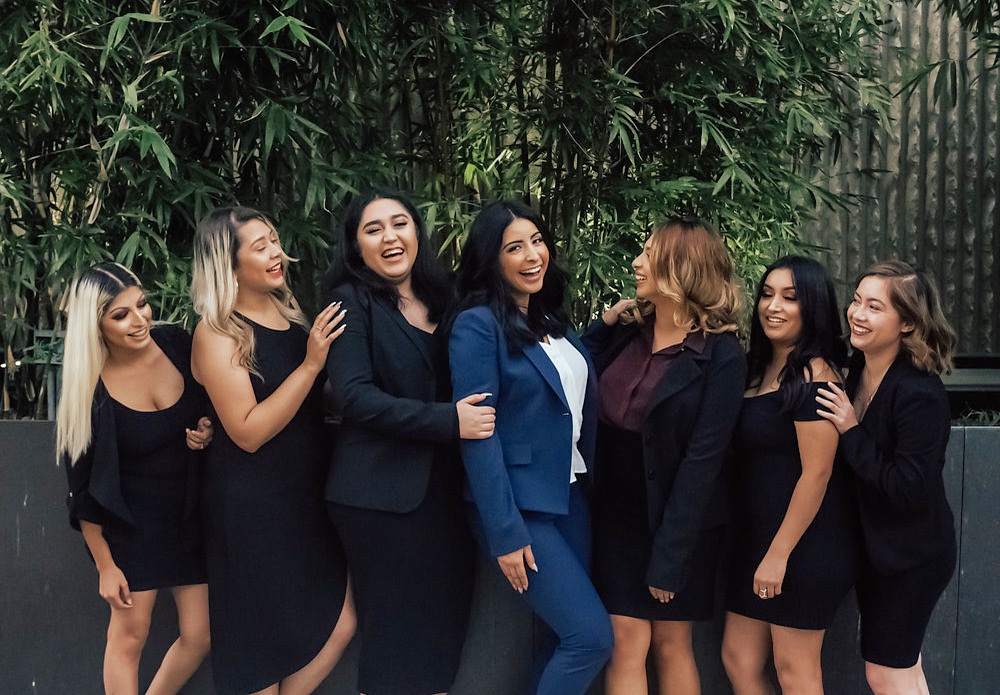
A quick, required note before we start: I'm a Farmers District Manager, so I have a point of view here. Everything below reflects that. Farmers agency owners are independent business owners, and income is never guaranteed. What you earn depends on your own effort and results, not on anything I can promise you.
The real question isn't "insurance." It's "ownership."
The short answer: When people ask if owning an insurance agency is worth it, they're usually comparing it to a job. But that's the wrong comparison. The right one is between building something you own and building something someone else owns. Almost everything that makes agency ownership worth it flows from that single distinction.
I've spent years coaching people into this business, and I've noticed the question almost always comes loaded with the wrong frame. Folks imagine "insurance career" and picture a cubicle and a quota. Fair enough, because a lot of insurance jobs are exactly that: you sell, someone else keeps the customer, and you start over at zero every month. When you leave, you leave with nothing but your experience.
Agency ownership is a different thing entirely. Every policy you write becomes part of a book of business that belongs to you. Those customers renew, and that renewal income keeps coming whether or not you wrote a brand-new policy that day. Over time, that book becomes a real asset, one you can grow, borrow against in some cases, sell, or hand to your kids. That's not a perk on top of a job. It's a fundamentally different economic model, and it's the honest reason someone would trade the safety of a salary for it.
How does owning an agency compare to a regular insurance job?
The short answer: In a job, you build value for your employer with capped upside and a schedule set by someone else. As an owner, you build a book of business you own, keep renewal income year after year, and tie your upside to what you build — that asymmetry is the whole argument.
Let me make the comparison concrete, because this is where the decision actually lives. Here's how ownership stacks up against a typical salaried or commission insurance role.
| A regular insurance job | Owning an agency | |
|---|---|---|
| What you build | Value for your employer | A book of business you own |
| Renewal income | Rarely yours to keep | Yours, year after year |
| Your schedule | Set by someone else | You run your own operation |
| Upside | Capped by pay bands | Tied to what you build |
| An exit | You leave with your experience | You can sell or transfer the agency |
| The tradeoff | Stability, guaranteed paycheck | Responsibility, variable income |
I want to be honest about that last row, because it's the real one. A job hands you stability, and ownership asks you to carry risk in exchange for the upside. Some months are better than others, especially early. If the idea of variable income keeps you up at night and you'd genuinely rather have a fixed number every two weeks, then a job is the right call, and there's no shame in that. Ownership is for the person who looks at that tradeoff and thinks, I'll take the risk if it means I'm building my own thing.
Why the barrier to entry is lower than people expect
The short answer: People assume owning an agency means franchise fees, buying an expensive book, or years of insurance experience. With the Farmers model, none of that is quite true. It's not a franchise, there are no franchise, sign-on, or royalty fees, and there are multiple entry points at different capital levels, which makes getting started more accessible than most business-ownership routes.
This is the part that surprises people most, so let me be specific about what makes the barrier lower here than with a lot of other ownership opportunities.
- No franchise fees, ever. Farmers agency ownership isn't a franchise, so you're not paying franchise, sign-on, or royalty fees to the company the way you would with most franchise businesses. That's a meaningful difference in upfront and ongoing cost.
- The brand and products already exist. A fully independent agency has to secure its own carrier appointments, build its own brand, and assemble its own product shelf. As a Farmers owner, you start with a recognized brand and a broad set of products on day one.
- Training is built in. You get access to the University of Farmers, one of the more awarded corporate training programs out there, plus a business coach. You're not figuring out the business alone.
- There's an on-ramp before ownership. You don't have to leap straight to full ownership. There are paths where you can work and earn under an established agent first, learning the business with less risk before you own your own.
- A district manager in your corner. This is the part I do. I help people get licensed, ramp up, and build, so the early climb isn't something you do by yourself.
On capital: there is a real requirement, and it varies by program and market. Farmers' own materials describe an entry point around a minimum of $50,000 in seasoned, investable assets for building a new agency, with higher amounts for larger opportunities like acquiring an existing agency. That's not nothing, but compared with the cost of buying an independent agency outright or franchising in most other industries, it's a comparatively accessible door into business ownership. Because the exact number depends on your market and path, the honest answer is to ask me directly and I'll tell you what it looks like for your situation.
What are the paths into agency ownership?
The short answer: There's more than one door: an associate-agent role is the lowest-risk start (earn and learn under an established agent), building fresh suits true builders, and the other paths trade capital for a head start. The right one depends on your savings, experience, and appetite for early risk.
One reason I love this model is that it doesn't force everyone through the same door. Depending on your capital, your experience, and how much risk you want to take on at the start, there's usually a path that fits. Here are the main ones.
| Path | Best for | The idea |
|---|---|---|
| Associate Agent | Lowest-risk start | Work and earn commission under an established agent, learning the business before you own |
| Retail (build new) | Builders starting fresh | Open your own agency from the ground up with Farmers' brand, training, and support |
| Agency Acquisition | Those who'd rather buy | Purchase an existing book of business and step into an established customer base |
| Elite Owner Program | High-capital entrepreneurs | A newer track for well-capitalized entrepreneurs who want to scale quickly, with enhanced support |
There are also specialized tracks, like the Financial Services and Business Insurance agent programs, for people who want to focus in those directions. The point isn't to memorize the menu, it's to know that "I don't have half a million dollars" or "I've never sold insurance" doesn't close the door. It just points you toward a different starting path. And this is a genuinely good moment to be looking: in early 2026 Farmers announced plans to bring on close to 1,700 new agency owners across the country this year, one of its largest recruiting pushes in decades.
Can you own an agency with no insurance experience?
The short answer: Yes — some of the best owners come from mortgage, real estate, B2B, and car sales. What transfers isn't industry knowledge (that's learnable, and the training exists precisely for it) — it's the ability to talk to people, work ethic, and the willingness to bet on yourself.
Good. Honestly. Some of the best owners I've coached had never touched insurance before they started. They came from mortgage lending, from real estate, from B2B sales, from selling cars. What they had in common wasn't industry knowledge, it was the ability to talk to people, a work ethic, and the guts to bet on themselves.
Insurance knowledge is learnable, and the training and coaching are there precisely so you can learn it. You'll need to get licensed, which is a real step but a manageable one, and there's support to help you through it. What's much harder to teach is drive and likeability, and if you've been successful in another sales field, you probably already have both. I'd rather coach a hungry former real-estate agent than someone who knows the products cold but won't pick up the phone.
What are the honest tradeoffs of agency ownership?
The short answer: You are the business: expenses, staffing, and results are yours, and income is variable during the ramp-up while you build the book. It's a genuine trade of security for ownership — which is exactly why it isn't for everyone, and why the people it fits love it.
I'd be doing you a disservice if I only sold you the upside, so here's the straight version of what you're signing up for.
You are the business. That means you're responsible for your expenses, your office, your staff if you hire, and the results. The income is variable, particularly in the early ramp-up period while you're building your book, and it's tied directly to your effort and performance rather than handed to you. A professional Farmers-branded storefront is part of the model, which is an ongoing cost. And like any business worth building, the first stretch asks more of you than it gives back, before that renewal income starts to compound in your favor.
None of that is meant to scare you off. It's meant to make sure the people who step into this do it with clear eyes. The owners who thrive are the ones who understood the tradeoff going in and wanted it anyway, because the thing on the other side, a business of your own that builds equity and can support your family for the long haul, was worth the climb to them. If that's you, let's talk. If it's not, I'd genuinely rather you know that now.
If this is a path you're seriously weighing, two doors: our careers page covers roles inside the agency, and Candice's district recruiting site at ownyouragencyca.com is the deeper dive on agency ownership itself — what District 80 looks for, and what the runway into ownership actually looks like.
The bottom line
So, is owning an insurance agency worth it? My honest answer, as someone who does this for a living and has watched a lot of people make the leap: it's worth it for the person who wants to own what they build. If you want a steady paycheck and no risk, keep the job. But if you've got sales ability, a strong work ethic, and a desire to build something that's genuinely yours, agency ownership offers something a job structurally can't: equity, renewal income, control, and an asset you can one day sell or pass on. The Farmers model lowers the barrier to getting there with no franchise fees, multiple entry paths, built-in training, and a district manager to guide you.
I'm Candice Salcedo, and I run Farmers District 80 here in San Jose. If any of this landed, reach out and let's have a real conversation, no pressure and no pitch, about whether this could be the right move for you. Worst case, you get an honest read on a path you were curious about. Best case, it's the start of building something that's finally yours.
Agency ownership FAQ
Is owning an insurance agency actually worth it?
For the right person, it can be, though it isn't for everyone. The core difference from a regular insurance job is ownership: as an agency owner you build a book of business that's an asset you own and can eventually sell or pass on, while a salaried role builds equity for someone else. Ownership also means real responsibility and variable income, so it suits people who want to build something of their own rather than trade hours for a paycheck. Income is not guaranteed and depends on your effort and performance.
How is owning a Farmers agency different from a regular insurance job?
A regular insurance job is typically salaried or commission employment where you build value for your employer. Agency ownership means you run your own business under an established brand: you keep renewal income, build equity in your book, control your schedule and staffing, and can pass the agency to a family member. Farmers provides the brand, training through the University of Farmers, product access, and a business coach, so you get support without giving up ownership. It's closer to entrepreneurship than employment.
How much money do you need to open a Farmers agency?
It varies by program and market, but Farmers' published materials describe an entry point around a minimum of $50,000 in seasoned, investable assets for building a new agency, with higher amounts for larger opportunities such as acquiring an existing agency or the Elite Owner Program. There are no franchise, sign-on, or royalty fees. Because requirements vary by market, the best way to know the figure for your situation is to ask your local district manager directly.
Do I need insurance experience to become a Farmers agency owner?
No. Many successful agency owners come from outside insurance entirely, from backgrounds like mortgage, real estate, B2B sales, and auto sales. What matters more is drive, people skills, and a willingness to learn. You'll need to get licensed, and Farmers provides training and coaching to help you get there. A district manager typically guides new owners through licensing, ramp-up, and building the business.
Why is the Farmers ownership model considered lower barrier than other agency programs?
A few reasons. It's not a franchise, so there are no franchise, sign-on, or royalty fees, unlike many business-ownership opportunities. Farmers offers multiple entry paths at different capital levels, including an associate program where you can work and earn under an established agent before owning. And you get built-in brand recognition, training, product access, and coaching rather than having to build all of that yourself as a fully independent agency would. That combination lowers both the cost and the risk of getting started compared with buying an independent agency outright.