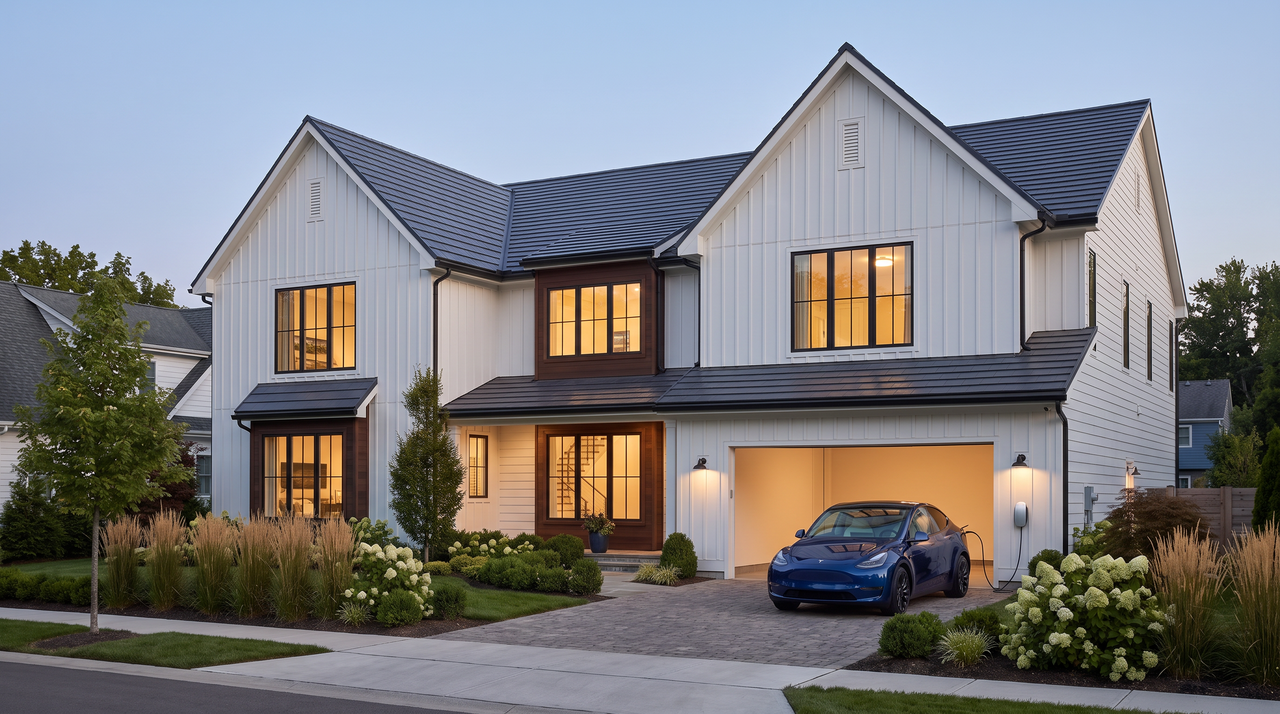
Mountain View & Palo Alto Insurance: What Do High-Value Homes Need?
The short answer: High-value homes in Mountain View and Palo Alto usually need a dwelling limit set to rebuild cost rather than sale price, extended replacement cost, a separate flood decision near San Francisquito Creek and the bay, scheduled valuables, and liability limits backed by an umbrella.
Your renewal asks you to confirm a dwelling limit, and the number looks small next to what you paid. That gap is usually correct. It is also where most local mistakes start.
Mountain View and Palo Alto share a lot with the rest of Silicon Valley, including earthquake exposure. Three things set them apart:
- Land is most of the price. A home here can sell for several million dollars while the structure on it costs a fraction of that to rebuild.
- Water is the local hazard people forget. San Francisquito Creek runs along Palo Alto's northern border, and both cities have bay-adjacent low ground. Flood is excluded from a standard home policy.
- Households carry more liability exposure. Higher net worth means a lawsuit has more to reach, so the liability side of the policy deserves as much attention as the dwelling side.
This guide narrows our San Jose & Silicon Valley insurance guide to the Peninsula side of the county. If you are deciding what a policy here should cost, the published averages and why they disagree are in how much home insurance costs in Silicon Valley.
How much dwelling coverage does a Palo Alto home need?
The short answer: A Palo Alto home typically needs dwelling coverage equal to the cost of rebuilding the structure at current Bay Area construction prices, which is usually far below its sale price because the land is not insured and survives any loss.
Start with what the market says. Redfin reported a Palo Alto median sale price of about $3.6 million in September 2026. The Census Bureau's American Community Survey puts Palo Alto's median owner-occupied home value at $2,000,000+, which is the survey's top reporting bracket, and Mountain View's at $1,927,000.
Sources: Redfin, Palo Alto housing market (Sept 2026) — median of homes sold that month; U.S. Census Bureau QuickFacts, ACS 2020–2024 — self-reported owner values, top-coded at $2,000,000.
None of those numbers is your dwelling limit. Your policy pays to rebuild the house, not to replace the lot. A 1,600-square-foot ranch on a valuable Palo Alto lot might cost a fraction of its sale price to rebuild. A large custom home with high-end finishes can cost more to rebuild than an owner expects. The method is square footage times current local construction cost, adjusted for finish level, plus demolition, debris removal and code upgrades. We walk through it in how much dwelling coverage you need in Silicon Valley.
| Number | What it measures | Used for your dwelling limit? |
|---|---|---|
| Sale price or Zillow estimate | Land plus structure plus location | No |
| Assessed value (property tax) | Purchase price adjusted under Prop 13 | No |
| Replacement cost estimate | Labor and materials to rebuild the structure today | Yes |
Three add-ons matter more as home values rise:
- Extended replacement cost. A cushion, commonly 25% to 50% above the dwelling limit, for the demand surge that follows a regional disaster.
- Building ordinance or law coverage. Pays the difference between rebuilding what stood and rebuilding to today's code.
- Replacement cost on contents. Without it, belongings are paid at depreciated value. The difference is explained in replacement cost vs. actual cash value.
Do you need flood insurance near San Francisquito Creek?
The short answer: Homes near San Francisquito Creek or bay-adjacent low ground in Palo Alto and Mountain View should weigh flood insurance seriously, because a standard homeowners policy excludes flood and the creek's upstream flood-protection project is still years from finished.
The creek's history is the reason. In the February 1998 El Niño storms, San Francisquito Creek overtopped its banks. Valley Water reports that more than 1,100 homes in Palo Alto flooded, Highway 101 closed, and damage across Palo Alto, East Palo Alto and Menlo Park was estimated at $28 million. The creek overtopped again on December 31, 2022.
Here is where the flood-protection work stands, per Valley Water and local reporting:
- Bay to Highway 101: complete. Valley Water lists that reach as finished in 2019.
- Newell Road Bridge: replacement of the 1911 bridge broke ground on May 21, 2026, with completion expected in spring 2027 (The Almanac).
- Upstream of Highway 101: still in design. The San Francisquito Creek Joint Powers Authority is re-evaluating alternatives, the Army Corps of Engineers plans to begin channel construction in 2030, and the Pope-Chaucer Bridge replacement comes after channel and floodwall work.
Valley Water says the channel between Highway 101 and Pope-Chaucer currently carries only about a 15-year flood.
Sources: Valley Water, E5 San Francisquito Creek Flood Protection; The Almanac, May 26, 2026.
Palo Alto's creek is not the only exposure. The City of Palo Alto says portions of the city sit in a FEMA flood zone and lists Matadero, Adobe and Barron creeks and the bay as flood sources. The City of Mountain View says 12% of the city lies in special flood hazard areas, from bay tidal flooding and Permanente Creek. Look up your address on the FEMA Flood Map Service Center or ask either city for its flood zone information.
How flood coverage works
- It is a separate policy. The City of Palo Alto notes that regular homeowners policies do not cover flood damage.
- NFIP limits are capped. FloodSmart lists maximums of $250,000 for the building and $100,000 for contents. On a high-value home, that often falls short, so private or excess flood coverage can sit above it.
- There is a waiting period. Coverage typically takes effect 30 days after purchase, with exceptions such as a purchase tied to a new mortgage. Buying before the rainy season matters.
- Mountain View has a discount. The city says its floodplain management earns the community a 10% discount on flood insurance rates.
Sources: FloodSmart (FEMA), Buy a Flood Insurance Policy; City of Mountain View, Flood Protection and Insurance Information.
Are the Palo Alto foothills in a fire hazard zone?
The short answer: Parts of the Palo Alto foothills are in a fire hazard zone: CAL FIRE's 2025 maps placed areas in the Palo Alto Hills in high or very high Fire Hazard Severity Zones and much of west Palo Alto in a moderate zone.
The City of Palo Alto reported that the state released CAL FIRE's updated maps for the city at the end of February 2025. The maps identify portions of Palo Alto generally west of Junipero Serra Boulevard and Foothill Expressway as moderate, and areas in the Palo Alto Hills as high or very high. Los Altos Hills adopted its own fire hazard severity zone map in June 2025.
Sources: City of Palo Alto, wildfire preparedness and FHSZ maps (2025); CAL FIRE / Office of the State Fire Marshal, Fire Hazard Severity Zones.
Two things are worth knowing. First, the city noted that CAL FIRE expects a single homeowner's zone change to be unlikely to affect their insurance by itself. Carriers usually price wildfire with their own risk models, parcel by parcel. Second, those models still weigh slope, vegetation and access, which is why a hills home a few miles from downtown can price very differently.
If you own in the hills, three steps help:
- Document mitigation.
Class A roof, ember-resistant vents and defensible space can earn credits under California's Safer from Wildfires framework.
- Check the wildfire deductible.
Some policies carry a separate percentage deductible for wildfire. Know the dollar figure before a claim.
- Have a fallback.
If standard carriers decline, the FAIR Plan with a DIC policy can rebuild most of the coverage.
Most of Mountain View and the Palo Alto flatlands sit well away from these zones. The foothill-versus-valley pricing gap across the county is covered in our Sunnyvale & Cupertino insurance guide.
What should Eichler and older-home owners in Palo Alto check?
The short answer: Owners of Palo Alto Eichlers and other older homes should check building ordinance or law coverage, how the policy handles a leak inside a radiant-heated slab, a rebuild estimate that reflects custom mid-century materials, and a deliberate earthquake decision.
Joseph Eichler left a particularly striking imprint on Palo Alto, in the words of the city's adopted Eichler design guidelines. They say some 2,700 Eichlers were built in Palo Alto across 31 tracts, from University Gardens in 1949–1950 to the last house on Guinda Street in 1975. The guidelines describe post-and-beam construction on a concrete slab with radiant heating embedded in the floor.
Source: City of Palo Alto, Eichler Design Guidelines (adopted April 2018).
Those features raise specific insurance questions:
Ordinance or law
A 1950s or 1960s home is rebuilt to today's seismic, energy and fire codes. This endorsement helps pay that difference.
Slab leaks
Radiant pipes run inside the slab. Ask whether the policy pays to open the floor and restore it after a sudden leak, since policies vary.
Custom materials
Glass walls, exposed beams and specialty siding can cost more per square foot than a tract rebuild. Tell the estimator.
Earthquake
Excluded from a standard home policy and written separately. USGS gives the Bay Area a 72% chance of a magnitude 6.7 or larger quake in 30 years.
Source: USGS, earthquake probability FAQ.
Our Sunnyvale and Cupertino guide goes deeper on Eichler underwriting, and the earthquake decision is in CEA vs. private earthquake insurance.
How much liability coverage does a high-net-worth household need?
The short answer: A high-net-worth household in Palo Alto or Mountain View typically needs home and auto liability set near the top of what the policies allow, plus an umbrella sized to net worth and future earnings, along with scheduled coverage for jewelry, art and collectibles.
Liability claims follow assets. A serious car accident, a guest injured at your home, or a dog bite can produce a judgment that exceeds a standard policy limit. When it does, the difference can reach savings, home equity and future wages.
The usual structure looks like this:
- Underlying limits first. An umbrella typically requires minimum liability limits on the home and auto policies underneath it. California's 30/60/15 auto minimum is a legal floor, far below what an umbrella usually asks for. See what 30/60/15 actually covers.
- Umbrella sized to exposure. Net worth is the floor, not the answer. Our umbrella sizing guide adds future earnings and risk factors such as a teen driver, a pool or a rental.
- Excess vs. umbrella. Higher limits sometimes come as excess liability rather than a true umbrella. The difference is covered in umbrella vs. excess liability.
Scheduled valuables
A homeowners policy covers personal property broadly, but it usually caps theft of jewelry, watches, furs and similar items at a low sublimit. Fine art, wine and collectibles carry their own limits. Scheduling an item lists it with an appraised value. It often broadens the covered causes of loss, including accidental loss, and can avoid the deductible. Keep appraisals current, because values move.
What do Mountain View condo owners and renters need?
The short answer: Most Mountain View households rent, so renters insurance is the most common policy in the city, while condo and townhome owners typically need an HO-6 with enough loss assessment coverage to match their HOA's master policy deductible.
The Census Bureau's American Community Survey puts Mountain View's owner-occupied rate at 38.6% for 2020–2024, so roughly six in ten homes are rented. Palo Alto's owner rate is 54.6%. Median gross rent is $3,062 in Mountain View and $3,484 in Palo Alto.
Source: U.S. Census Bureau QuickFacts, Mountain View (ACS 2020–2024).
Renters. A landlord's policy covers the building, not your belongings or your liability. Renters insurance covers both, plus extra living costs if a covered loss forces you out. On Mountain View rents, that loss-of-use limit deserves a look. Flood is excluded here too. The City of Mountain View notes that tenants can buy flood coverage for their personal property. Our California renters insurance guide covers the basics, and the Mountain View renters insurance page can start a quote.
Condo and townhome owners. The HOA master policy covers the building and common areas. Your HO-6 covers the unit interior, your improvements, your belongings and your liability. The piece owners often miss is loss assessment. If the HOA passes its master policy deductible to owners after a covered loss, that coverage helps pay your share. Details are in loss assessment coverage in California.
What drives car insurance for Mountain View and Palo Alto commuters?
The short answer: Car insurance for Mountain View and Palo Alto commuters is driven mainly by driving record, annual mileage and years of experience under Prop 103, so Caltrain riders and hybrid workers should report accurate mileage, and EV owners should check repair-cost coverage.
Most local commutes run on US-101, I-280 or CA-85, with Caltrain as the rail alternative. California prices auto insurance mainly on driving record, annual mileage and years of driving experience under Proposition 103. Credit scores are not used, and qualifying good drivers receive a 20% discount.
- Report real mileage. If you switched to Caltrain or a hybrid schedule, your annual miles may have dropped. Mileage is a rating factor, so tell us.
- Carry UM/UIM. The Insurance Research Council estimated 20.4% of California drivers were uninsured in 2023 (Insurance Information Institute). Uninsured motorist coverage protects you when the other driver can't pay.
- EVs cost more to repair. Sensors, battery packs and specialist body shops raise repair bills. See insuring a Tesla or EV in California.
- Match auto limits to the umbrella. Your auto liability has to meet the umbrella's underlying requirement, or the umbrella may leave a gap.
Bundling auto with your home or condo policy typically earns a multi-policy discount. Start with our Silicon Valley auto insurance page.
The bottom line
Insuring a home in Mountain View or Palo Alto comes down to a few local decisions. Set the dwelling limit to rebuild cost, not the sale price, and add extended replacement cost and ordinance or law coverage. Make a real flood decision if you live near San Francisquito Creek, Permanente Creek or the bay, and remember the NFIP caps. Check your foothill fire zone, decide on earthquake on purpose, and build liability limits that match what you own.
Our office is in San Jose, and we write across Santa Clara County. As a Farmers agency with access to additional markets, we match you to the right market for your home, including hard-to-place hillside and high-value properties. Send us your address for a Palo Alto home insurance review, or call (408) 669-4068, Monday through Friday, 8 to 5.
Mountain View & Palo Alto insurance FAQ
Is Palo Alto in a flood zone?
Parts of it are. The City of Palo Alto says portions of the city sit in a FEMA flood zone, mainly from San Francisquito Creek along the northern border, plus Matadero, Adobe and Barron creeks and the bay. The creek flooded more than 1,100 Palo Alto homes in 1998, and protection upstream of Highway 101 is still in design. Check your address on the FEMA Flood Map Service Center. A flood policy is separate from home insurance and typically takes 30 days to start.
Does homeowners insurance cover flooding in Mountain View?
No. A standard homeowners or renters policy excludes flood, so it is bought separately through the National Flood Insurance Program or a private flood carrier. The City of Mountain View says 12% of the city lies in special flood hazard areas, from bay tidal flooding and Permanente Creek, and its floodplain management earns the community a 10% discount on flood insurance rates. Tenants can insure their belongings against flood too. NFIP building coverage caps at $250,000.
Should I insure my Palo Alto house for what I paid for it?
Usually not. Your dwelling limit should equal the cost to rebuild the structure at current local construction prices. Palo Alto sale prices are mostly land, which a home policy does not insure, so the rebuild figure is typically well below the purchase price. Insuring to the sale price adds premium without adding protection. Add extended replacement cost for demand surge after a disaster and ordinance or law coverage for code upgrades on an older home.
Do Eichler homes need special insurance?
They use a standard homeowners policy, but a few details matter more. Eichlers have radiant heating pipes inside the concrete slab, so ask how your policy handles opening the floor after a sudden leak. Building ordinance or law coverage helps pay to rebuild a 1950s or 1960s home to today's code. Glass walls and post-and-beam framing can raise the rebuild cost per square foot, so describe them accurately when the replacement cost estimate is run.
Do Palo Alto homeowners need umbrella insurance?
Many do. Liability judgments can reach savings, home equity and future wages once they exceed your home and auto limits, and Palo Alto households often have significant assets. An umbrella adds liability coverage above those policies, usually starting at $1 million. It typically requires minimum underlying limits on your home and auto policies first. Size it to net worth plus future earnings, and add more if you have a teen driver, a pool or a rental.
Is renters insurance worth it in Mountain View?
For most renters, yes. About six in ten Mountain View homes are rented, according to Census survey data, and a landlord's policy does not cover a tenant's belongings or liability. Renters insurance covers both, plus extra living costs if a covered loss forces you out, which matters given local rents. It does not cover flood or earthquake, but both can be added through separate coverage if your building sits in a higher-risk area.